Expert construction skills transfer at your location, on your machines, with your materials.
Hydraform Onsite Training brings the skills of our qualified technical trainers directly to your site — wherever that site is. Rather than sending your team to Johannesburg, our experts travel to you, train your crew on your machines, source-verify your local materials, and leave your operation running efficiently from day one.
The Hydraform building system — whether interlocking soil-cement block production or conventional brick, block, and paving — is a practical discipline. Knowing the theory is necessary but not sufficient. What determines production quality on a real site is whether your team can identify the right soil in your area, operate your specific machine correctly, manage your blockyard layout, and maintain consistent output under the conditions of your project. Onsite Training addresses all of this in the environment where it actually matters.
Held at Hydraform HQ in Johannesburg. Fixed 5-day programme, maximum 15 participants, written exam, Official Certificate of Competency. Best for individuals and small groups who need the full structured certification. View upcoming dates →
Onsite Training — This Page
We Come to You
Delivered at your site, on your machines, with your team — any size. Uses your local materials. Certificate of Attendance issued. Best for teams already on site who need operationally relevant skills transfer fast.
Ground Support
We Stay with You
Extended onsite monitoring and quality assurance beyond initial training. Custom duration and scope. Comprehensive written reports. Best for large-scale or complex projects requiring sustained quality management. Read about Ground Support →
What Your Team Will Learn
Tailored to your machine, your local soil, and your project requirements
Health & Safety
Every onsite programme begins with a full site safety induction covering PPE, machine hazards, material handling, and emergency procedures. Daily safety talks are conducted throughout. Our trainers take health and safety seriously — negligence costs lives and stops projects.
Material Selection & Local Sourcing
Your trainer tests and classifies the soils, sand, and aggregates available in your specific area — jar tests, drop tests, and sieve analysis. You learn to source from what you have, not from a textbook. This unlocks the 30–40% cost advantage of using on-site material over transported conventional brick. The Hydraform interlocking system is built on this principle.
Machine Operation & Mould Changes
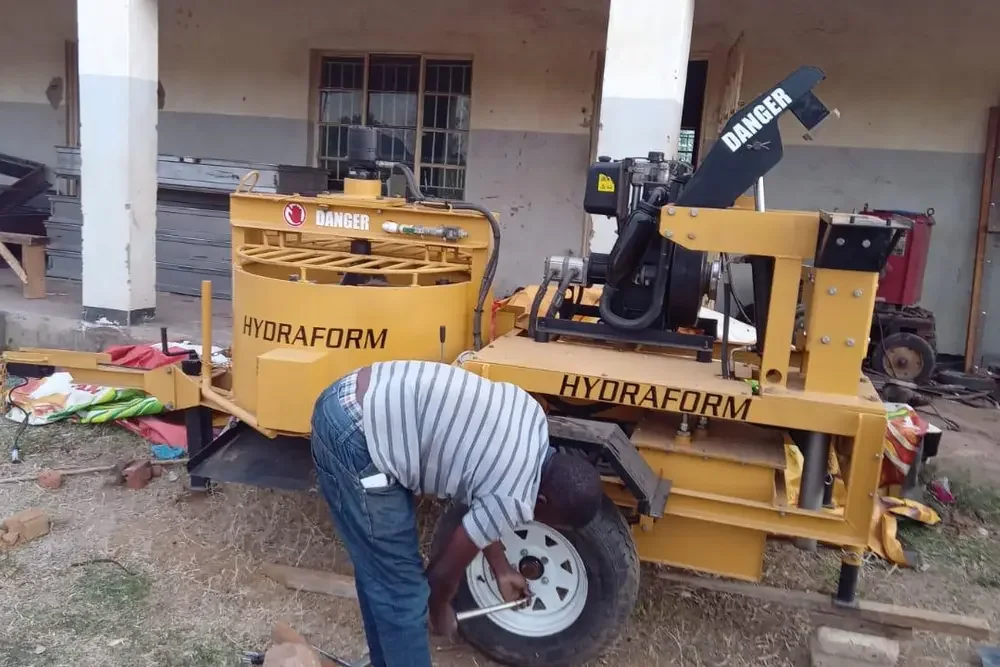
Full operation of your specific Hydraform machine — loading, vibration cycles, tamper control, mould management, and production optimisation. Mould changes are covered practically. Your operators learn on their own machine, so there is no adjustment period when training ends.
Block Yard Setup & Production Management
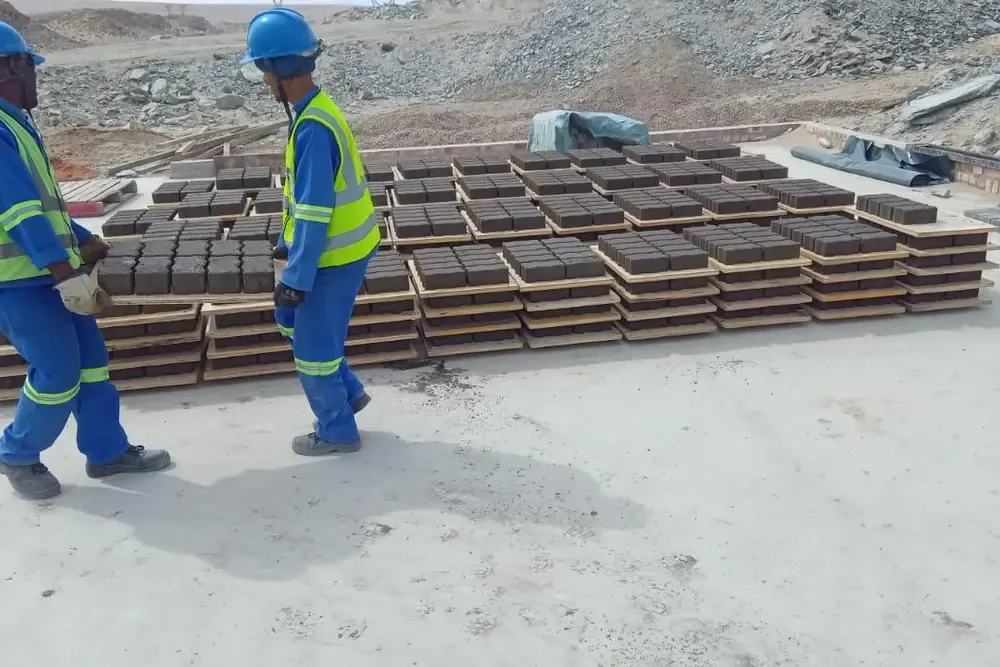
Efficient yard layout, production flow from raw material to cured block, stacking and curing management, material ordering, and the principle that at least one week's material must always be available on site. Your trainer optimises the yard you have — not an idealised diagram.
Quality Control
Visual block evaluation during production, identification of mix problems before they produce a full run of substandard output, testing procedures, and strength benchmarks at 7 and 14 days. A foreman who cannot identify a bad block early builds with bad blocks. Our Customer Service team provides ongoing remote technical support post-training →
Curing
Correct stacking, covering, watering, and curing duration. Blocks that are not cured correctly will not reach their rated strength regardless of mix quality. This is a common failure point on sites where training did not cover it explicitly.
Construction of a Demonstration Structure (interlocking soil-cement training only)
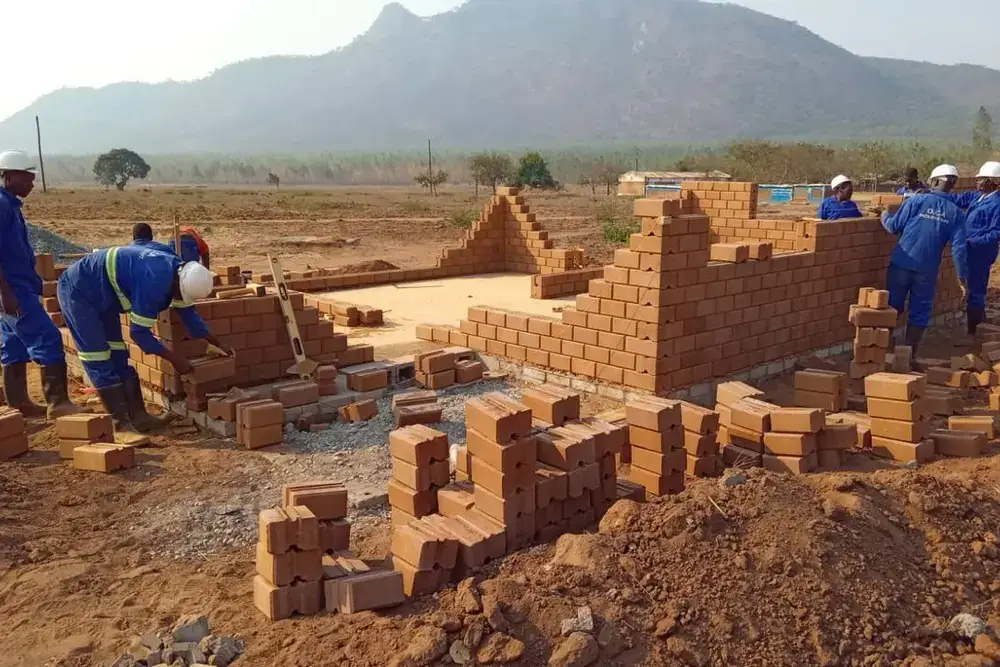
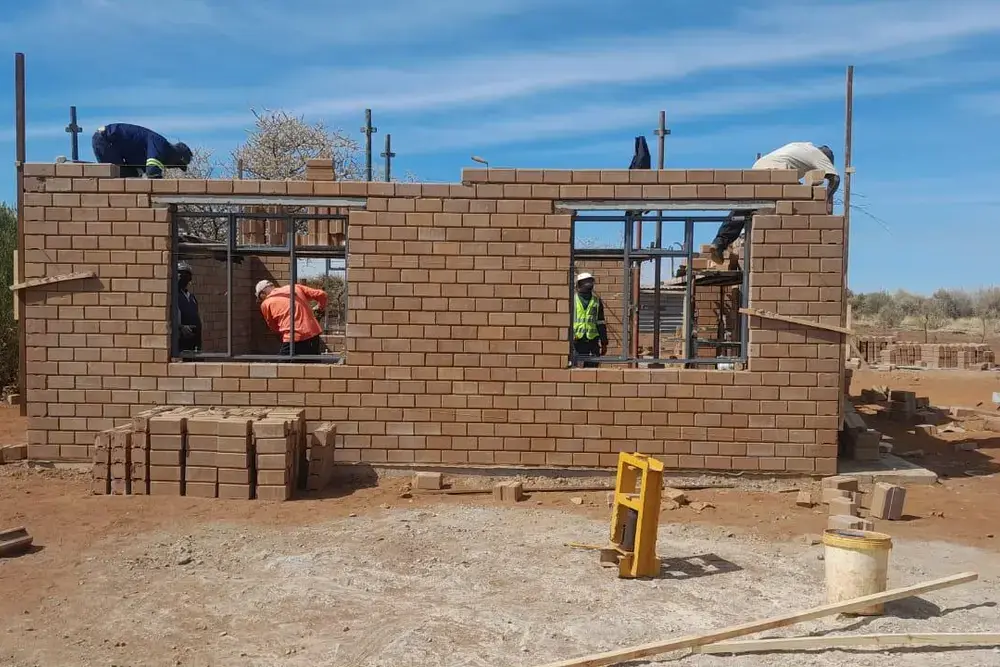
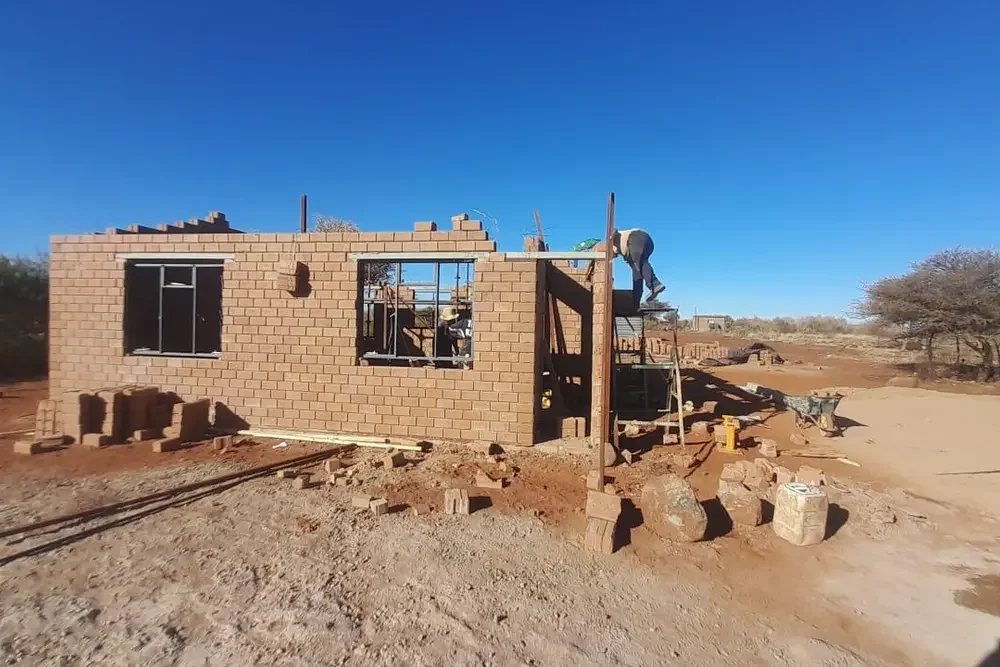
Your team builds a real structure on your site during the training — not a classroom exercise. By the end of the programme, they have laid a foundation, set a first course, dry-stacked walls, built corners and T-junctions, and understood the ring beam. They have done it, not watched it. That is the difference between training that transfers and training that doesn't.
Why Onsite Training Works
The advantages that a fixed-venue programme cannot deliver
01
Train Your Entire Team Simultaneously
The Training Academy is capped at 15 participants per intake. Onsite Training has no group size limit — your full production crew, blockyard team, and site management can be trained together in the same session.
02
Local Materials Validated from Day One
Onsite Training does not use hypothetical materials. Your trainer tests your area's soil and aggregate as part of the programme. Your team learns to produce quality blocks from what they will actually be using — not ideal inputs that may not be locally available.
03
Faster Return on Investment
A team trained on their own machines, in their own environment, produces better results from day one of independent operation. No adjustment period. No unfamiliar machines. Production quality and output improve immediately — protecting the investment made in the Hydraform machine.
04
Relevant to Your Specific Site Conditions
Whether your site is a remote community development, a mining camp, or a large-scale affordable housing development, training is shaped around your actual operating conditions — not a generalised programme.
05
Certificate of Attendance Issued
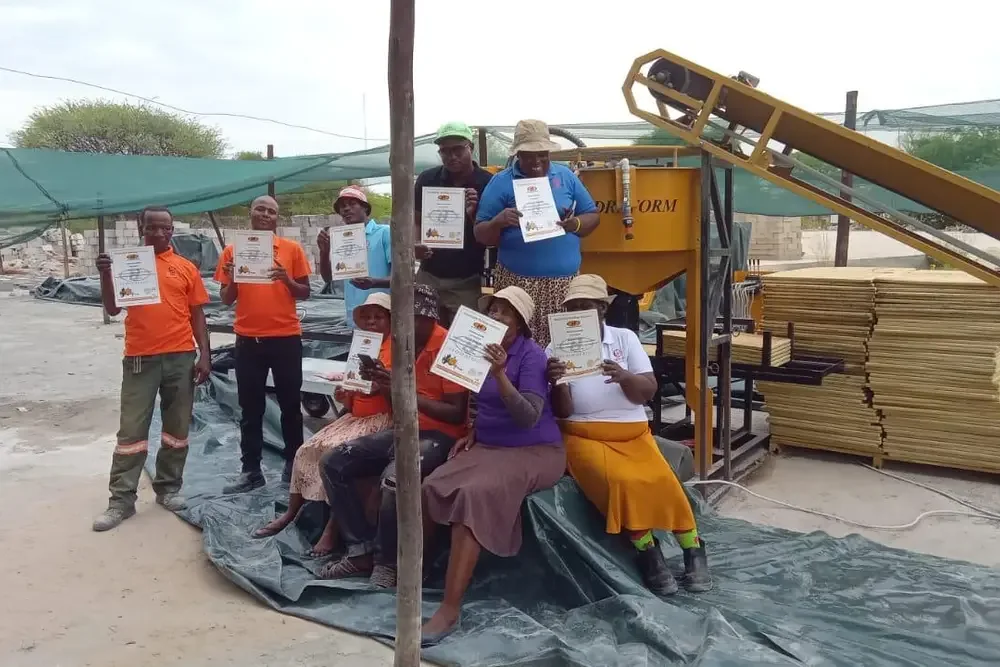
Every participant receives a Hydraform Certificate of Attendance on completion. For NGO and foundation projects requiring funder documentation, these certificates form part of the skills transfer record.
06
Delivered in Your Language
Onsite Training is available in English, French, Swahili, and Zulu. Language must be specified at the time of booking. Hydraform operates extensively across Francophone Africa — our French-language capability is established, not improvised.
How to Get the Most from Your Onsite Training Programme
The quality of your onsite training outcome is significantly affected by how your team and site are prepared before the trainer arrives. Three things matter most.
1
Select Your Team Carefully
Identify the strongest, most committed members of your workforce to form the trained core team. These are the people through whom knowledge and standards will flow to everyone else on site. Poor selection at this stage creates a skills gap that is expensive to correct. Your foreman in particular must be identified and committed before the programme begins.
2
Appoint and Brief Your Foreman in Advance
The foreman is responsible for daily machine operation, team performance, material management, and block quality. This is not a role to assign during training — it must be established beforehand so the trainer can work with that person in their actual leadership capacity from day one.
3
Ensure Materials Are Available and in Sufficient Quantity
Training cannot proceed productively if materials run out. Ensure at least one week's worth of soil, aggregate, and cement is on site before the trainer arrives. Consistent material supply during the programme is a prerequisite for consistent training outcomes.
Onsite Training Across Every Sector Hydraform Serves
Deployed wherever a Hydraform machine is operating and a team needs to be trained
Community Development & Social Housing
Training teams to build homes, schools, clinics, and community facilities faster and more affordably than conventional brick allows — with the eco-friendly advantage of on-site soil production and no fired-brick carbon load.
Training the operators of independent block-making businesses to produce consistently, manage their yard efficiently, and grow their operation. The business case is built on 30–40% cost savings versus conventional brick construction.
Training site teams to build worker accommodation and facilities on-site using local materials — eliminating the cost and logistics of importing conventional building materials to remote locations.
Training teams on large-scale government housing programmes, with the certification documentation and quality standards that public procurement and funder accountability require.
Training teams on affordable housing developments where construction speed and material cost directly determine whether projects are financially viable — building up to six times faster than conventional brick.
For banks and funding institutions supporting housing or infrastructure development, Hydraform Onsite Training is the skills component that makes an investment viable. Certified, documented, and auditable.
Onsite Training is most effective as part of a complete programme. The combination that produces the best long-term outcomes:
Step 1
Training Academy or Onsite Training
Your team gains foundational knowledge of the full Hydraform system, validated by certificate. The Training Academy in Johannesburg delivers the highest level of certification (Certificate of Competency). Onsite Training delivers faster, site-specific skills transfer (Certificate of Attendance).
Step 2
Ground Support (where required)
A Hydraform technical specialist stays on site to monitor the transition from training to independent production at scale — catching the gaps every team has between knowing and doing consistently under pressure. Read about Ground Support →
Step 3
Customer Service & Ongoing Support
Remote technical support, machine servicing, and quality spares supply keep your operation running after training ends. Our Customer Service and Spares department supports clients worldwide — with freight available to any country.
Frequently Asked Questions
Everything you need to know about Hydraform Onsite Training
What is Hydraform Onsite Training?
Hydraform Onsite Training is a construction skills transfer programme in which Hydraform's qualified technical trainers travel to your site and train your team on your machines, using your local materials. It covers health and safety, soil and material selection, machine operation and maintenance, block yard setup and management, quality control, curing, and — for interlocking soil-cement programmes — construction of a demonstration structure on your site. A Hydraform Certificate of Attendance is issued to participants on completion.
How is Onsite Training different from the Training Academy?
The Training Academy is a fixed 5-day programme held at Hydraform's headquarters in Johannesburg, limited to 15 participants, awarding a Certificate of Competency after a written exam. Onsite Training takes place at your location, on your machines, with your team of any size, using the materials available in your area. It awards a Certificate of Attendance. The Academy is better suited to individual delegates needing a structured certification; Onsite Training is better suited to teams already on a site who need operationally relevant skills transfer quickly.
Where can Hydraform Onsite Training be delivered?
Hydraform Onsite Training can be delivered anywhere in the world where a Hydraform machine is in operation. Our trainers are experienced in working across Africa, including in remote and difficult-access locations. Travel, accommodation, and logistics for the trainer are arranged by Hydraform and included in the programme proposal.
What languages is Hydraform Onsite Training available in?
Onsite Training is available in English, French, Swahili, and Zulu. The required language must be specified at the time of booking. Hydraform has delivered French-language training across Francophone Africa for many years.
How many people can be trained in an Onsite Training session?
There is no fixed limit on group size for Onsite Training — unlike the Training Academy which is capped at 15 participants. Onsite Training is designed to accommodate full site teams, which is one of its primary advantages over a fixed-venue programme.
Does Hydraform Onsite Training include practical construction work?
For interlocking soil-cement block programmes, yes — practical construction of a demonstration structure on your site is included. Your team builds a real structure during the training under trainer supervision — not a classroom exercise. Conventional brick and paving programmes focus on machine operation and production rather than full construction.
What certification do participants receive from Onsite Training?
Participants receive a Hydraform Certificate of Attendance on successful completion of the onsite programme. This differs from the Certificate of Competency awarded at the Training Academy, which requires a written exam. For projects where a higher level of certification is required, we recommend combining Onsite Training with a subsequent Training Academy course.
What should I do after Onsite Training to maintain quality on site?
After Onsite Training, production quality depends on consistent application of what was learned — particularly mix ratios, machine maintenance, and quality control procedures. If your project is large-scale or you want ongoing assurance beyond the initial programme, Hydraform's Ground Support provides extended onsite monitoring and evaluation. Our Customer Service and Spares department also provides remote technical support and machine servicing for existing clients.
Onsite Training in Action
Our trainers on client sites — from block production to interlocking construction.
Get In Touch
Enquire about Onsite Training at your location — we respond within one business day
 French version